


 The Camille and Henry Dreyfus Foundation has announced the selection of eight new Henry Dreyfus Teacher-Scholars for 2025. The award honors young faculty in the chemical sciences who have created an outstanding independent body of scholarship and are deeply committed to education with undergraduates. Each Henry Dreyfus Teacher-Scholar receives an unrestricted research grant of $75,000.
Six of the eight Dreyfus scholars in 2025 are women.
 Jeanine Amacher is an associate professor pf chemistry at Western Washington University in Bellingham. Her research focuses on peptide-binding domains and how only a small number of amino acids are recognized in a given interaction. Dr. Amacher is a graduate of the University of Oregon, where she majored in physics. She holds a Ph.D. in biochemistry from Dartmouth College in New Hampshire.
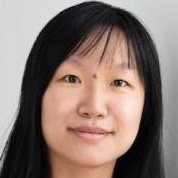 Shuming Chen is an associate professor of chemistry and biochemistry at Oberlin College in Ohio. Her teaching and research concentrate on organic synthesis; rearranging the way atoms are connected to each other. Dr. Chen is a graduate of Grinnell College in Iowa, where she majored in chemistry. She earned a Ph.D. in biochemistry from Yale University.
 Melissa Gordon is an associate professor of chemical and biomolecular engineering at Lafayette College in Easton, Pennsylvania. Her research is focused on polymer design and synthesis. Dr. Gordon is an alumna of Lafayette College, where she majored in chemical engineering. She earned a Ph.D. in chemical engineering at the University of Delaware.
 Geneva Laurita is an associate professor of chemistry and biochemistry at Bates College in Lewiston, Maine. Her research interests focus on understanding the structure-property relationships of inorganic solid-state materials, particularly those of relevance to energy and electronics-related technology. Dr. Laurita is a graduate of the University of Northern Colorado in Greeley, where she majored in chemistry. She earned a Ph.D. in chemistry from Oregon State University.
 Julie Pollock is an associate professor of chemistry at the University of Richmond in Virginia. Her research focuses primarily on using chemical biology approaches to understand disease development and progression. Dr. Pollock is a graduate of Hope College in Holland, Michigan, where she majored in chemistry. She holds a Ph.D. in chemistry from Duke University in Durham, North Carolina.
 Kathryn Riley is an associate professor of chemistry and biochemistry at Swarthmore College in Pennsylvania. Her research interests include nanomaterial surface properties and interactions with biomolecules. Dr. Riley is a 2010 alumna of Swarthmore College, where she majored in chemistry, mathematics, and education. She earned a Ph.D. in analytical chemistry from Wake Forest University in Winston-Salem, North Carolina.