


The International Society of Experimental Hematology recently announced the recipients of its 2026 ISEH Scientific Awards. All three award recipients are women.
 Ellen Rothenberg, the Edward B. Lewis Professor of Biology at the California Institute of Technology, is the 2026 recipient of the Donald Metcalf Award. The honor recognizes Dr. Rothenberg for her career-long, outstanding scientific achievements in the field.
A Caltech faculty member for more than four decades, Dr. Rothenberg is known for her pioneering contributions to decoding the regulatory logic that drives multipotent cells toward a lymphoid cell fate. Her lab currently studies the molecular mechanisms that are responsible for developmental lineage choice as hematopoietic stem cells differentiate into T lymphocytes.
Dr. Rothenberg is a summa cum laude graduate of Harvard University, where she majored in biochemical sciences. She earned her Ph.D. in cell biology from the Massachusetts Institute of Technology and completed postdoctoral research in cell surface immunogenetics at Memoriam Sloan-Kettering Cancer Center in New York City. In addition to her work at Caltech, Dr. Rothenberg holds an appointment with Cornell University as an Andrew D. White Professor-at-Large.
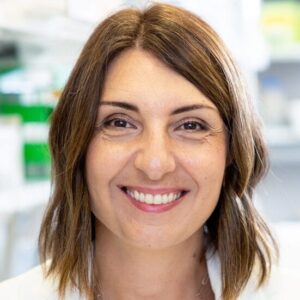 Eirini Papapetrou, professor at the Icahn School of Medicine at Mount Sinai in New York City, is the 2026 recipient of the McCulloch and Till Award, which honors mid-career scientists for their contributions to hematology and stem cell research.
Dr. Papapetrou’s research has resulted in innovative and high impact achievements in leverage induced pluripotent stem cells (iPSCs) to model and study the mechanisms of myelodysplasia (MDS) and acute myeloid leukemia (AML). This work has led to the development of powerful tools to identity new therapeutic targets for AML, MDS, inherited bone marrow failure syndromes, and clonal hematopoiesis.
At the Icahn School of Medicine, Dr. Papapetrou holds appointments in oncological sciences, hematology and medical oncology, and stem cell biology and regenerative medicine. She received both a medical degree and a Ph.D. from the University of Patras in Greece and completed postdoctoral research in genetic engineering and stem cell biology at Memoriam Sloan-Kettering Cancer Center.
 Bethan Psaila, professor of hematology at the University of Oxford in England, is the 2026 recipient of the Janet Rowley Award. The honor recognizes outstanding scientific contributions for early career scientists within their first seven years as an independent group leader.
Dr. Psaila has conducted ground-breaking research covering myeloproliferative neoplasms, the microenvironment, and megakaryocyte/platelet biology. Her recent research has highlighted the ability of platelets to take up circulating fetal and tumor DNA — a discovery with the potential to allow for early detection of some of the most deadly and difficult to treat solid tumors.
After completing her general medical training at University College London, Dr. Psaila received her Ph.D. through a joint program at Imperial College London and Cornell Medical College in New York. She completed postdoctoral training at the National Institutes of Health’s National Human Genome Research Institute in Bethesda, Maryland.