

Gender Differences in AI Skepticism Connected to Risk-Aversion in Women

Dr. Sophie Borwein

A new study led by Sophie Borwein, assistant professor of political science at the University of British Columbia in Canada, and Beatrice Magistro, assistant professor of AI governance at Northeastern University in Boston, has investigated why women tend to be more skeptical of artificial intelligence than men. They found that women are more likely to doubt the technology’s economic benefits.

In a survey of some 3,000 Canadians and Americans, the authors found women participants were more likely to be generally “risk-averse” than men, and 11 percent more likely to say AI’s risks outweigh its benefits. Women were particularly more likely to question that AI would deliver meaningful economic gains.
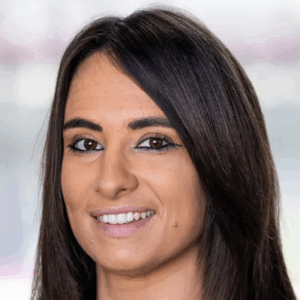
Dr. Beatrice Magistro

However, when the authors presented participants with information that AI-driven job gains were guaranteed, the gender gap in skepticism disappeared, with both men and women responding similarly. On the other hand, when employment outcomes were uncertain, women became significantly more skeptical.

“Importantly, our research suggests that the adoption of AI could exacerbate existing gender inequalities if women remain more skeptical and less supportive than men,” the authors write. “These emerging patterns of differential adoption of AI technologies may create new forms of occupational segregation that will persist regardless of whether AI ultimately delivers its promised benefits or creates unforeseen consequences.”

Based on their findings, the authors call for policymakers to develop targeted education and training programs to increase women’s participation in AI-related fields and promote gender diversity in technology leadership.

Dr. Borwein and Dr. Magistro had support from co-authors at the California Institute of Technology, New York University, and Cornell University.

LEAVE A REPLY

Please enter your comment!
Please enter your name here

This site uses Akismet to reduce spam. Learn how your comment data is processed.

Related Articles

Latest News

Michelle R. Johnston Named the First Woman President of the University of Montevallo

Although it was initially founded as school for women, the University of Montevallo has never had a woman president. Now the university has reached a historic milestone and selected selected Michelle R. Johnston to serve as its next president.

Katy Ho to Lead Portland Community College in Oregon

Dr. Ho is the new acting president of Portland Community College. Prior to her new role, she was the college's executive vice president.

Five Women Scholars Selected to Lead Professional Organizations in Their Fields

The women who are taking on new leadership roles with professional academic organizations are Yasmeen Shorish of James Madison University in Virginia, Elena Carbone of the University of Massachusetts Amherst, Shelley Lusetti of New Mexico State University, Oona Hathaway of Yale Law School, and Keisha Blain of Brown University.

Katherine Yelick to Direct Lawrence Berkeley National Laboratory

Lawrence Berkeley National Laboratory is a national program run by the University of California for the U.S. Department of Energy's Office of Science. Dr. Yelick, a computer scientist and longtime UC Berkeley faculty member, will become the laboratory's next director on July 1.

Two Women Selected for Key Interim Leadership Roles with the Universities of Wisconsin

Renée Wachter, chancellor of the University of Wisconsin-Superior, has been selected to serve as interim president of the Universities of Wisconsin. Maria Cuzzo, provost of UW-Superior, will serve as the university's interim chancellor while Dr. Wachter assumes her new responsibilities.

President

The next president will lead one of the most successful and well-respected community colleges in the country.

Research Assistant Professor, Kenneth C. Griffin Department of Economics

The selected candidate should have expertise and experience in theoretical models in labor and public economics as well as in microeconometrics and programming.