


The International Congress of Basic Science (ICBS) has announced the inaugural recipients of its ICBS Medal. The award recognizes scientists who have achieved groundbreaking, transformative advances in basic science. The medals span three major disciplines: mathematics, physics, and engineering. Among this year’s nine award-winners, three are women professors teaching at universities in the United States.
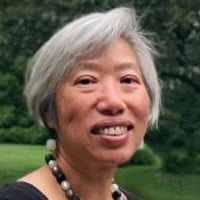 Andrea J. Liu, the Hepburn Professor of Physics at the University of Pennsylvania, received the 2026 ICBS Marie Curie Medal in Physics. Dr. Liu is a theoretical soft and living matter physicist who has transformed the understanding of disordered systems. Her most lauded achievement is pioneering the jamming paradigm, a revolutionary framework that unifies the behavior of seemingly disparate disordered materials. At Penn, she is the founder and director of the Center for Soft and Living Matter. Before joining the Penn faculty in 2004, she taught in the department of chemistry and biochemistry at the University of California, Los Angeles.
“Andrea J. Liu’s legacy displays an unswerving commitment to finding simple conceptual understanding within the complexity of nature,” reads the award announcement. “Her work has not only pushed the envelope of statistical physics but has also galvanized a new echelon of investigators to probe the most daunting questions of disordered systems.”
Dr. Lui is an honors graduate of the University of California, Berkeley, where she majored in physics. She holds a Ph.D. in physics from Cornell University in Ithaca, New York.
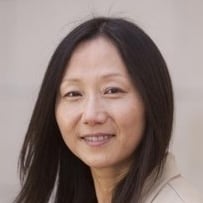 Zhenan Bao, the K.K. Lee Professor of Chemical Engineering at Stanford University, received the 2026 ICBS Chien-Shiung Wu Medal in Engineering. Dr. Bao is a pioneer in materials science and chemical engineering whose groundbreaking contributions have defined a new discipline at the intersection of synthetic materials, electronics, and living systems. She is known for developing skin-inspired electronics, an innovation that is transforming wearables and implantables for robots, healthcare, prosthetics, and human-machine interfaces. A Stanford faculty member for more than two decades, Dr. Bao is the founding director of the Stanford Wearable Electronics Initiative. She has more than 800 refereed publications and more than 80 U.S. patents.
“Zhenan Bao’s impact is defined by intellectual creativity, sustained dedication to discovery, and an extraordinary commitment to mentoring future generations of scholars and innovators,” reads the award announcement. “Her work has advanced the frontiers of soft electronics while training students and researchers who are now shaping academia, industry, and entrepreneurship worldwide. She serves as a powerful source of inspiration.”
Dr. Bao earned her master’s and doctoral degrees in chemistry from the University of Chicago.
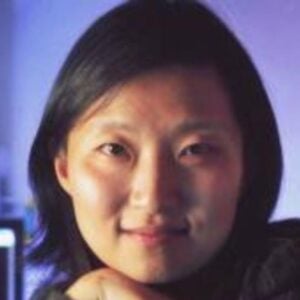 Xiaowei Zhuang, the David B. Arnold Professor of Science at Harvard University and a Howard Hughes Medical Institute Investigator, received the 2026 ICBS Steven Chu Medal in Engineering. A biophysicist, Dr. Zhuang has significantly advanced the limits of what we can see within the living cell. She invented the Stochastic Optical Reconstruction Microscopy (STORM) — a super-resolution imaging technology that breaks the traditional diffraction limit of light, allowing scientists to visualize biological structures at the nanoscale — and MERFISH (Multiplexed Error-Robust Fluorescence in situ Hybridization), an innovative method that enables scientists to map thousands of RNA molecules and genomic loci within single cells in their native tissue context.
“Xiaowei Zhuang’s legacy is one of intellectual brilliance and unwavering dedication to the pursuit of knowledge,” reads the award announcement. “Her work has not only advanced the frontiers of biophysics but has also inspired countless scientists to explore the deepest questions of biological organization.”
Dr. Zhuang received her bachelor’s degree in physics from the University of Science and Technology of China and her Ph.D. in physics from the University of California, Berkeley.