
Study Finds Women Leaders Encounter 30 Distinct Types of Discrimination in the Workplace

Dr. Diehl

According to a new report published in Human Resource Development Quarterly, women leaders face as many as 30 distinct types of discrimination in the workplace.

The study was led by Amy Diehl, chief information officer at Wilson College in Pennsylvania, in partnership with Leanne Dzubinski, dean of faculty development and global education at Westmont College in California, and Amber Stephenson, professor of healthcare management at Clarkson University in New York. The three scholars have previously collaborated on several research projects aimed at identifying the ways women experience gender-based discrimination in the workplace.

Dr. Dzubinski

For their latest project, Dr. Diehl and her co-authors recruited a sample of 913 women leaders from the United States who worked in one of four industries where men represent the majority of leadership roles, but the overall workforce is either women-dominated or gender-balanced: healthcare, higher education, faith-based nonprofits, and law. The participants were asked a series of open-ended questions to gauge their experiences with identity-based bias at work.
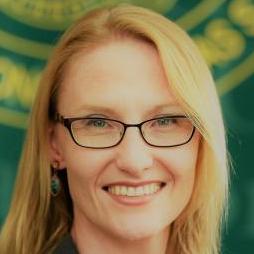
Dr. Stephenson

In analyzing the participants’ responses, the authors found 30 distinct identity-related factors that have been used against women while at work. These include facets related to their demographics, appearance and physical qualities, marital and parental status, health, political preferences, personality traits and communication styles, educational background, employment history, and more.

Dr. Diehl and her co-authors believe this variety in workplace discrimination against women suggests “almost any facet of their identity can be declared problematic for a specific woman in a specific context.” The research team recommends that human resource leaders should develop more inclusive policies that protect women’s identities and create training initiatives to ensure supervisors can recognize and address these many forms of discrimination when they arise.

LEAVE A REPLY

Please enter your comment!
Please enter your name here

This site uses Akismet to reduce spam. Learn how your comment data is processed.

Related Articles

Latest News

Michelle R. Johnston Named the First Woman President of the University of Montevallo

Although it was initially founded as school for women, the University of Montevallo has never had a woman president. Now the university has reached a historic milestone and selected selected Michelle R. Johnston to serve as its next president.

Katy Ho to Lead Portland Community College in Oregon

Dr. Ho is the new acting president of Portland Community College. Prior to her new role, she was the college's executive vice president.

Five Women Scholars Selected to Lead Professional Organizations in Their Fields

The women who are taking on new leadership roles with professional academic organizations are Yasmeen Shorish of James Madison University in Virginia, Elena Carbone of the University of Massachusetts Amherst, Shelley Lusetti of New Mexico State University, Oona Hathaway of Yale Law School, and Keisha Blain of Brown University.

Katherine Yelick to Direct Lawrence Berkeley National Laboratory

Lawrence Berkeley National Laboratory is a national program run by the University of California for the U.S. Department of Energy's Office of Science. Dr. Yelick, a computer scientist and longtime UC Berkeley faculty member, will become the laboratory's next director on July 1.

Two Women Selected for Key Interim Leadership Roles with the Universities of Wisconsin

Renée Wachter, chancellor of the University of Wisconsin-Superior, has been selected to serve as interim president of the Universities of Wisconsin. Maria Cuzzo, provost of UW-Superior, will serve as the university's interim chancellor while Dr. Wachter assumes her new responsibilities.

President

The next president will lead one of the most successful and well-respected community colleges in the country.

Research Assistant Professor, Kenneth C. Griffin Department of Economics

The selected candidate should have expertise and experience in theoretical models in labor and public economics as well as in microeconometrics and programming.