


 The Pew Charitable Trusts recently announced that 21 researchers are joining the Pew Scholars Program in the Biomedical Sciences. These early-career scientists will receive four years of funding to explore cutting-edge research uncovering insights into human health and disease.
“For more than 40 years, Pew has proudly supported researchers pioneering approaches to help advance human health and medicine,” said Donna Frisby-Greenwood, senior vice president for scientific advancement. “This incoming class of biomedical scholars bridges new technologies with creative approaches to biomedical research, and we’re thrilled to support their innovative work.”
This year’s class of early-career, junior faculty joins a legacy of more than 1,000 scientists who have received awards from Pew since 1985. During their time as scholars, they will have opportunities to meet annually with fellow Pew-funded scientists to forge connections and cultivate community across a wide variety of disciplines.
“Scientific discovery is moving at a rapid pace, and now more than ever we need curious and creative researchers leading the charge,” said Lee Niswander, a 1995 Pew scholar and chair of the program’s national advisory committee. “These new biomedical scholars are prepared to meet that challenge, and I look forward to watching their research unfold.”
Scholars were chosen from 211 applicants nominated by leading academic institutions and researchers throughout the United States. This year’s class includes scientists who are harnessing new technology to examine human health and behavior, studying the building blocks of immunity, and engineering new methods to treat disease.
Of the 21 new Pew Scholars, seven are women.
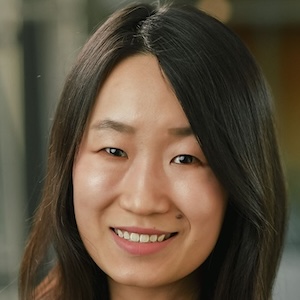 Xin Gu is an assistant professor at the Dana-Farber Cancer Institute of Harvard Medical School. She is conducting research on a novel pathway that cells use to selectively degrade proteins that regulate gene activity. She joined the Harvard Medical School faculty in September 2024. She received her bachelor’s degree in biology at Peking University in China. She holds a Ph.D. in biology from the Massachusetts Institute of Technology. Dr. Gu performed postdoctoral work in the department of neurobiology at Harvard Medical School.
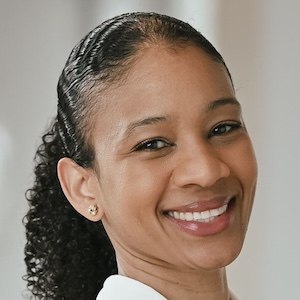 Whitney Henry is an assistant professor of biology at the Massachusetts Institute of Technology. She is conducting research on how a stress-induced cell-death program called ferroptosis contributes to injury and regeneration in the liver. Dr. Henry, who joined the MIT faculty in 2024, is a graduate of Grambling State University in Louisiana, where she majored in biology with a minor in chemistry. She holds a Ph.D. from Harvard University.
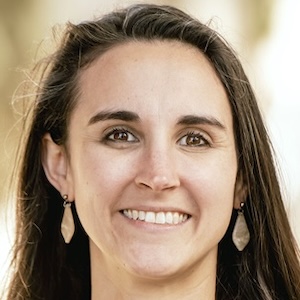 Katherine Hummels is an assistant professor of microbiology at the University of Georgia. She will work to characterize the molecular mechanisms that govern the assembly of the bacterial cell envelope. Dr. Hammels is a graduate of the University of Iowa, where she majored in microbiology. She holds a Ph.D. in microbiology from Indiana University and conducted postdoctoral research at Harvard Medical School.
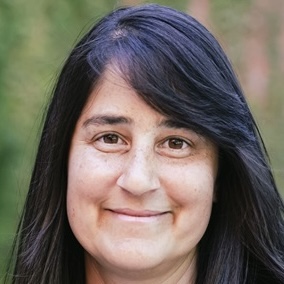 M. Maya Kaelberer is an assistant professor of physiology at the University of Arizona. She will explore how maternal diets can lead offspring to a lifelong craving for sugary foods. Dr. Kaelberer joined the faculty at the University of Arizona in 2025 after serving as an instructor at Duke University in North Carolina. She holds bachelor’s degrees in animal physiology/neuroscience and psychology from the University of California, San Diego and a Ph.D. in cellular & molecular physiology from Yale University.
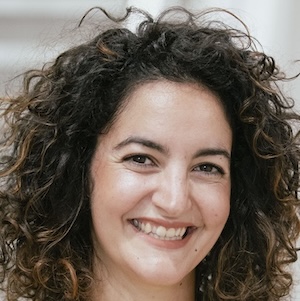 Christina Tringides is an assistant professor of materials science and nanoengineering at Rice University in Houston, Texas. She is the first faculty member at Rice to be named a Pew Scholar. Dr. Tringides will characterize the molecular and mechanical signals that promote the growth of glioblastoma, a primary brain cancer in adults. Dr. Tringides is a graduate of the Massachusetts Institute of Technology, where she majored in physics and materials science and engineering. She holds a Ph.D. in medical engineering and medical physics from a joint program of MIT and Harvard University. She also holds a Ph.D. in biophysics from Harvard.
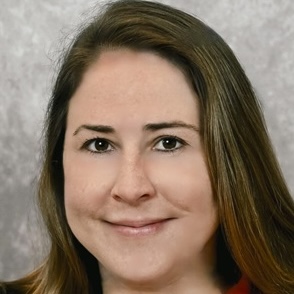 Jessalyn Ubellacker is an assistant professor of molecular metabolism at the T.H. Chan School of Public Health at Harvard University. She will conduct research on how lymph nodes offer a protective environment for metastatic cancer cells that can foster progression. Dr. Ubellacker earned her medical degree at Stanford University and holds a Ph.D. in biological and biomedical studies from Harvard University. She did postdoctoral research at the University of Texas Southwestern Medical Center in Dallas.
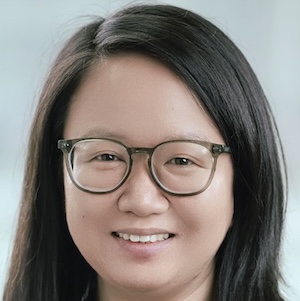 Meng Wu is an assistant professor of molecular microbiology at the Washington University School of Medicine in St. Louis. She will research how early-life exposure to beneficial microbes programs the body’s tissue-building fibroblast cells to enhance immunity and tissue integrity. Dr. Wu joined the Washington University faculty in 2023 after serving as a research fellow at Harvard Medical School. She is a graduate of Tsinghua University in China and holds a Ph.D. in human and statistical genetics from Washington University.