


 The American Philosophical Society was founded in 1743 by Benjamin Franklin. The society honors distinguished scientists, social scientists, humanities scholars, artists, and societal leaders with membership in the society. Members have included George Washington, Thomas Jefferson, Robert Frost, Thomas Edison, Sandra Day O’Connor, Charles Darwin, Toni Morrison, and Albert Einstein.
This year, the society granted membership to 33 Americans. Of these, 12 are women with ties to the academic world in the United States.
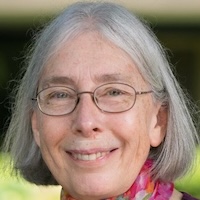 Martha P. Haynes is the Distinguished Professor of Arts & Science in Astronomy Emerita at Cornell University in Ithaca, New York. Over the course of her career, Dr. Haynes’ research has contributed to the understanding of the composition, interactions, distribution, and evolution of galaxies in the universe. Dr. Haynes is a graduate of Wellesley College in Massachusetts, where she majored in physics and astronomy. She holds a master’s degree and a Ph.D., both from Indiana University.
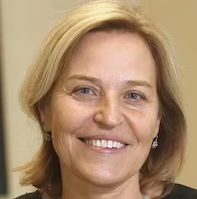 Kelsey C. Martin is the executive vice president at the Simons Foundation Autism Research Initiative. She is a professor emerita and former dean of the School of Medicine at the University of California, Los Angeles. Her research studies the molecular and cell biology of long-term memory, with a focus on how experience alters connectivity between neurons. Dr. Martin is a graduate of Harvard University, where she majored in English. After a term in the Peace Corps, she earned a medical degree and a Ph.D. in molecular biophysics and biochemistry at Yale University.
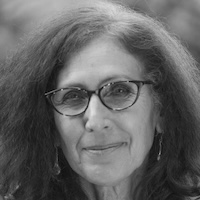 Karen B. Strier is the Vilas Research Professor and Irven DeVore Professor of Anthropology at the University of Wisconsin-Madison. She is an international authority on the endangered northern muriqui monkey, which she has been studying in the Brazilian Atlantic forest since 1982. She is the author of
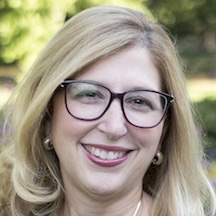 Teresa K. Woodruff is President Emerita and MSU Research Foundation Professor at Michigan State University. Earlier, Dr. Woodruff was dean of the graduate school and associate provost for graduate education at Northwestern University in Evanston, Illinois. Dr. Woodruff is responsible for many discoveries that have changed our understanding of fundamental reproductive processes. Dr. Woodruff is a graduate of Olivet Nazarene University in Bourbonnais, Illinois, where she double majored in zoology and chemistry. She earned a doctorate in biochemistry, molecular biology, and cell biology from Northwestern University.
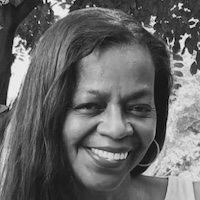 Thavolia Glymph is the Peabody Family Distinguished Professor of History, professor of history, and professor of law at Duke University in North Carolina. She was the first Black woman to serve as president of the American Historical Association. Professor Glymph is the author of Out of the House of Bondage: The Transformation of the Plantation Household (Cambridge University Press, 2008) and The Women’s Fight: The Civil War’s Battles for Home, Freedom, and Nation (University of North Carolina Press, 2020). She is a graduate of Hampton University in Virginia and holds a master’s degree and a Ph.D. from Purdue University in West Lafayette, Indiana.
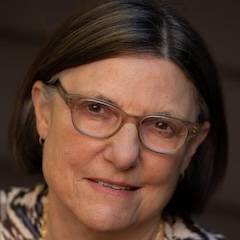 Carla Hesse is the Jane K. and Peder Sather Professor of History at the University of California, Berkeley. She has served as executive dean of the College of Letters & Science and dean of the Division of Social Sciences at the university. She is the author of The Other Enlightenment: How French Women Became Modern (Princeton University Press, 2001) and the forthcoming book The People’s Justice: Revolutionary Law and the Founding of the French Republic (Princeton University Press, 2026). Dr. Hesse holds a bachelor’s degree in history and French literature from the University of California, Santa Cruz. She earned a master’s degree and a Ph.D. in European history from Princeton University in New Jersey.
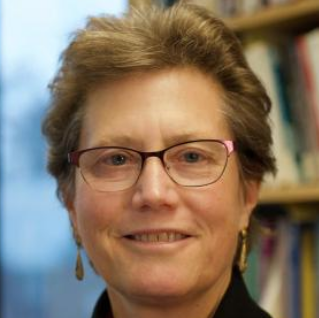 Helen V. Milner is the B.C. Forbes Professor of Politics and International Affairs and director of the Niehaus Center for Globalization and Governance at Princeton University in New Jersey. She has written extensively on issues related to international and comparative political economy, the connections between domestic politics and foreign policy, and the impact of globalization on domestic politics. Dr. Milner is the co-author of Professor Milner is a graduate of Stanford University, where she majored in international relations. She holds a master’s degree and a Ph.D. in government from Harvard University.
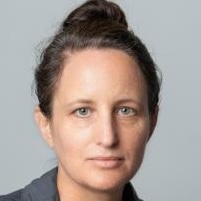 Sophia Rosenfeld is the Walter H. Annenberg Professor of History at the University of Pennsylvania. Her research focuses on the Enlightenment, the trans-Atlantic Age of Revolutions, and the legacy of the eighteenth century for modern democracy. She is the author of the award-winning book, Common Sense: A Political History (Harvard University Press, 2011) and
 Caroline Levine is the David and Kathleen Ryan Professor of the Humanities at Cornell University. Professor Levine is the author of the award-winning book Forms: Whole, Rhythm, Hierarchy, Network (Princeton University Press, 2015) and The Activist Humanist: Form and Method in the Climate Crisis (Princeton University Press, 2023). She was previously a professor and chair of the English department at the University of Wisconsin-Madison. A graduate of Princeton University, where she majored in comparative literature, Professor Levine earned a Ph.D. in English at the University of London.
 Toril Moi is the James B. Duke Professor of Literature and Romantic Studies and professor of English, philosophy, and theater studies at Duke University. She grew up in the countryside in the southwest of Norway and was educated at the University of Bergen. She came to the United States in 1989. Dr. Moi has three broad areas of interest: feminist theory and women’s writing; the intersection of literature, philosophy and aesthetics; and ordinary language philosophy. Professor Moi is the author of several books, including
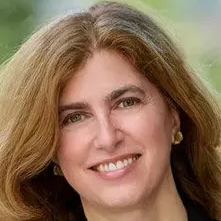 Jessica G. Riskin is the Frances and Charles Field Professor of History at Stanford University in California. She taught at the Massachusetts Institute of Technology before coming to Stanford in 2001, and has also taught at Iowa State University. Her research interests include early modern science, politics and culture, and the history of scientific explanation. Her latest book is The Power of Life: The Invention of Biology and the Revolutionary Science of Jean-Baptiste Lamarck (Riverhead Books, 2026). Professor Riskin is a graduate of Harvard University and holds a Ph.D. in history from the University of California, Berkeley.
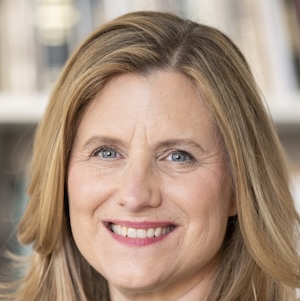 Mary Elizabeth Magill is president emerita and professor of law at the University of Pennsylvania. She previously served as provost at the University of Virginia and dean of Stanford Law School. On August 1, Professor Magill will become executive vice president and dean of the Georgetown University Law Center. She earned her bachelor’s degree in history from Yale University and her juris doctorate from the University of Virginia Law School. After graduating from law school, she was a clerk for Ruth Bader Ginsburg at the Supreme Court of the United States.