


 The Winston Churchill Foundation of the United States recently announced the selection of 16 Churchill Scholars in science, math, and engineering for the 2026-27 academic year. The Churchill Scholarship is for one year of master’s study at Churchill College of the University of Cambridge in England. The award covers full tuition, a competitive stipend, travel costs, and the chance to apply for a $4,000 special research grant.
The foundation received 159 nominations from 102 participating institutions, both numbers are the highest in the program’s history, dating back to 1963. The College of William & Mary in Virginia, Texas A&M University, Tufts University in Massachusetts, and the University of Arkansas each have their first-ever Churchill Scholar this year.
Of the 16 Churchill Scholars for the coming academic year, eight are women:
 Kate Carline is a senior at the College of William & Mary in Virginia. A double major in biology and public policy, Carline has focused her research on bacteriophages and bioengineering microbial communities. She has
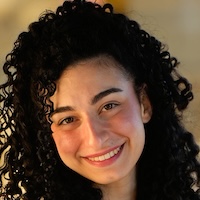 Jennifer Lauren Hamad is a graduate of Stanford University, where she majored in molecular, cellular, and developmental biology. At the University of Cambridge, she will pursue a master’s degree in biological science (pathology) and then hopes to enter an MD/Ph.D. program.
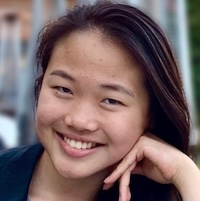 Christine Li is a senior at Columbia University, majoring in computer science. Li has organized the annual Columbia Undergraduate Computer and Data Science Research Fair and has also performed with the Columbia Ballet Collaborative. At Cambridge, Li plans to pursue a master’s degree in advanced computer science. She ultimately plans to earn a Ph.D. in quantum computing.
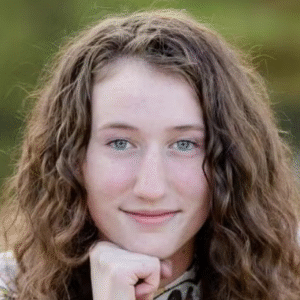 Arianna McCarty is a senior studying chemical and biological engineering at the University of Colorado Boulder. Most recently, McCarty joined the Burdick Lab, where she engineers heart tissues to model focal cardiac fibrosis, a type of cardiac scarring that occurs after heart attacks.
 Carolyn Nguyen is a senior at the University of California, Berkeley, where she is studying molecular and cell biology and business administration. She conducts research applying CRISPR technology to modulate gene expression with the goal of advancing targeted epigenetic editing tools.
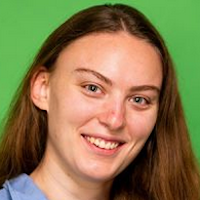 Saskia Solotko is a senior at Tufts University in Massachusetts, where she is majoring in mathematics and has been on the rowing team. She was the first Tufts student to win the Alice T. Schafer Prize for Excellence in Mathematics, the only national undergraduate research award for women in mathematics, and the first Tufts student to win a Churchill Scholarship.
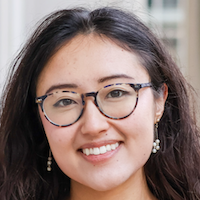 Katie Spivakovsky is a senior at the Massachusetts Institute of Technology, where she is majoring in biological engineering and artificial intelligence with minors in mathematics and biology. Her research focuses on applying reinforcement learning techniques and physics-based constraints to computationally model the evolution of visual systems and neural circuitry.
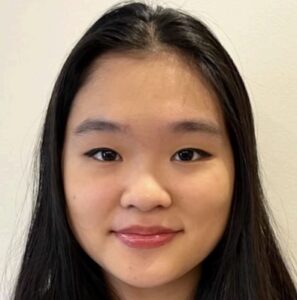 Katherine Tung is a 2025 graduate of Harvard University. She is a past winner of the Alice T. Schafer Prize for Excellence in Mathematics. While an undergraduate, she taught abstract algebra to high school students from underprivileged and underrepresented groups and served in a leadership role for Harvard’s Gender Inclusivity in Mathematics group.