


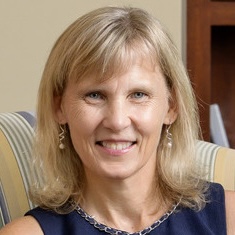
 Following six months of service as interim president, Laura Carlson has been officially named the twenty-ninth president of the University of Delaware. Her presidency will begin on January 1.
According to the most recent federal data, the University of Delaware enrolls nearly 20,000 undergraduate students, 60 percent of whom are women. The university has a graduate student population of roughly 4,500 students.
Prior to her interim appointment in July, Dr. Carlson served as provost of the University of Delaware for three years. Before coming to Delaware, she spent over two decades on the faculty at the University of Notre Dame in Indiana. In addition to teaching as a professor of psychology, she held several administrative roles during her long tenure, including vice president, associate provost, and dean of the Graduate School.
An interdisciplinary scholar whose work spans the fields of psychology, computer science, engineering, architecture, and linguistics, Dr. Carlson focuses her research on spatial cognition – how people mentally represent the places and objects around them. She is the co-editor of Functional Features in Language and Space: Insights from Perception, Categorization, and Development (Oxford University Press, 2005).
“I have fallen in love with UD, and I am deeply committed to its purpose and people,” said Dr. Carlson. “Together we can make the University of Delaware a place where we inquire with impact, create with connections, innovate with intention, grow with purpose, welcome with promise, educate with outcomes, work with trust, and belong with joy. I so look forward to our work together to put this vision into action.”
Dr. Carlson is a graduate of Dartmouth College in Hanover, New Hampshire, where she majored in the psychology of language. She holds a master’s degree from Michigan State University and a Ph.D. from the University of Illinois Urbana-Champaign.