


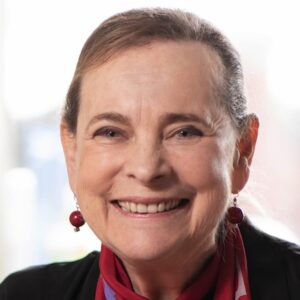
 Lucy Shapiro, the Virginia and D. K. Ludwig Professor Emerita at the Stanford University School of Medicine, recently received the 2025 Lasker-Koshland Special Achievement Award from the Lasker Foundation. The award, known as the “American Nobel,” recognizes Dr. Shapiro’s outstanding 55-year career in biomedicine. She is the eighteenth recipient and the third woman to receive the prestigious honor since its launch in 1994.
Dr. Shapiro is known for discovering how bacteria coordinate their genetic logic in time and space to generate two distinct daughter cells. Her groundbreaking research led her to join the faculty at Stanford University, where she founded the department of developmental biology in 1989. Over the next three decades, she transformed how biologists think of bacteria. She frequently collaborated with scientists from other disciplines, leading her to create the interdisciplinary field of systems biology
As her research expanded, Dr. Shapiro became increasingly concerned about health threats from the microbial realm. She advised the administrations of both President Bill Clinton and President George W. Bush on biological warfare and emerging infectious diseases. She also founded two biotech companies to fight the rise of antibiotic resistance, leading to novel approaches that have produced drugs for use in humans, as well as an anti-pest agricultural agent.
“Our world is an interconnected system, like a living cell, and any perturbation to an individual system has consequences throughout the entire system,” said Dr. Shapiro in her acceptance speech. “Life on earth is fragile. Global health is at a tipping point.”
She continued, “Never has the need to speak up been more dire than it is today — at a time of distrust of science and rampant misinformation. Each of us needs to use everything at our disposal to help humanity to survive in our interconnected world.”
An honors graduate of Brooklyn College in New York, Dr. Shapiro earned her Ph.D. in molecular biology from the Albert Einstein College of Medicine, where she later served as the first woman department chair in molecular biology. She went on to serve as the first woman department chair in microbiology at Columbia University before beginning her 36-year tenure at Stanford.