


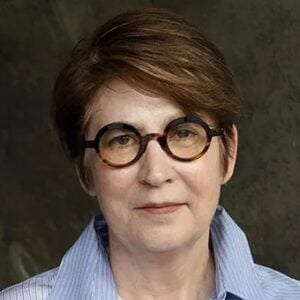
 Rosalind Morris is chair of the department of anthropology at Columbia University. Dr. Morris, the Moore Collegiate Professor of Anthropology, focuses her work on the histories and social lives — including the deaths and afterlives — produced in the interstices of industrial and resource-based capitalism in the Global South. Her work has led to numerous publications, including Unstable Ground: The Lives, Deaths, and Afterlives of Gold in South Africa (Columbia University Press, 2025). In addition to her teaching and writing, Dr. Morris is the owner of a media production company, Rocam Productions.
Dr. Morris holds a bachelor’s degree from the University of British Columbia, a master’s degree from York University in Toronto, and a Ph.D. in anthropology from the University of Chicago.
 Elena Shadrina is a new assistant professor of history at Princeton University. As a scholar, she specializes in the social, economic, and legal history of Europe and the Mediterranean in the High Middle Ages. Her current book project, From Assembly to Archive: The Documentary Revolution in Medieval Venice, examines the role played by commercial capital in the local redefinitions of legal norms, documentary practices, power, and property in medieval Europe.
Dr. Shadrina received her bachelor’s degree in history and her master’s degree in medieval studies from the University of Toronto. She holds a Ph.D. in medieval history from Harvard University.
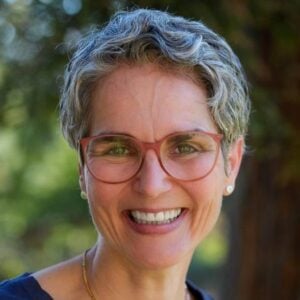 Katherine Kiesel was named associate dean for undergraduate academic programs in the College of Agricultural and Environmental Sciences at the University of California, Davis. Dr. Kiesel, professor of teaching in the department of agricultural and resource economics, has been a UC Davis faculty member since 2015. She helped launch and co-directs the university’s Diversity and Inclusion in Research, Education, and Career training program. Before her time with UC Davis, Dr. Kiesel taught at California State University, Sacramento.
Dr. Kiesel holds a master’s degree in communication sciences from the Technical University of Berlin in Germany, a master’s degree in applied and agricultural economics from Montana State University, and both a master’s degree and a Ph.D. in agricultural and resource economics from the University of California, Berkeley.
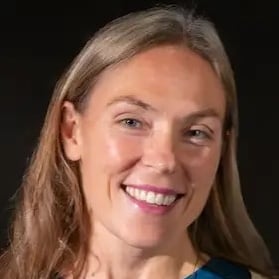 Heather Lerner is director of the Beneski Museum of Natural History at Amherst College in Massachusetts. Dr. Lerner comes to her new role from Earlham College in Richmond, Indiana, where she was a professor of biology and director of the Joseph Moore Museum for 15 years. She previously worked for the University of Michigan’s Museum of Zoology and the Smithsonian Institution. An evolutionary biologist by training, Dr. Lerner studies the relationships, evolution, and conservation of birds and other organisms.
Dr. Lerner is a graduate of Bryn Mawr College in Pennsylvania, where she majored in biology. She holds a master’s degree and a Ph.D. in ecology and evolutionary biology from the University of Michigan.