


 Five early-career scientists will receive a total of up to $12.5 million as the first winners of Schmidt Sciences’ new FirstLight Awards. The awards honor researchers pursuing groundbreaking discoveries centered on major astronomical research observatories. Each awardee will receive as much as $500,000 annually for up to five years to build and lead a team that will seek to advance our understanding of the universe. As part of the award, scientists will make their research, software and related work using the Schmidt Observatory System freely available to other researchers and the public.
Among the inaugural cohort of five FirstLight Award winners, three are women.
 Adina Feinstein is an assistant professor in the department of physics and astronomy at Michigan State University. Before coming to Michigan State, she was a NASA Sagan Postdoctoral Fellow at the University of Colorado Boulder. Her research will track flares and outbursts from young stars and gas escaping from the planets they host, revealing how “space weather” shapes planetary systems. Dr. Feinstein is a graduate of Tufts University in Medford, Massachusetts, where she majored in physics with a minor in English. She holds a master’s degree and a Ph.D. in astronomy and astrophysics from the University of Chicago.
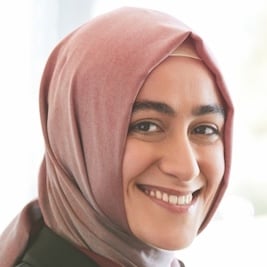 Burcin Mutlu-Pakdil is an assistant professor of astronomy and physics at Dartmouth College in Hanover, New Hampshire. Her research will focus on finding the smallest, faintest, and most numerous galaxies in the universe, understanding dark matter and how galaxies form. Dr. Mutlu-Pakdil earned a bachelor’s degree in physics from Bilkent University in Türkiye. She holds a master’s degree from Texas Tech University and a Ph.D. in astrophysics from the University of Minnesota-Twin Cities. She spent three years as a postdoctoral researcher at the University of Arizona.
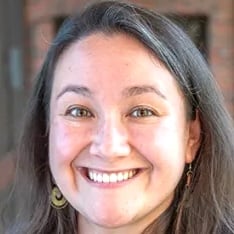 Kimberly Ward-Duong is an assistant professor of astronomy at Smith College in Northampton, Massachusetts. She had a one-year postdoctoral fellowship at the Space Telescope Science Institute in Baltimore. Prior to that, she held the Five College Astronomy Department Education and Research Fellowship at Amherst College in Massachusetts for three years. Her research team will monitor how young giant planets and brown dwarfs grow while hunting for new planets still embedded in their birth environments, discovering how these systems form and evolve. Dr. Ward-Duong is a graduate of Northern Arizona University and holds a Ph.D. from Arizona State University.