


 The National Academy of Education has elected 19 distinguished education scholars and leaders to its membership, recognizing their significant contributions to education research and policy.
Alfredo J. Artiles, president of the National Academy of Education said: “We welcome this outstanding group of scholars and leaders to the National Academy of Education at a critical moment in the history of our nation—one that demands a renewed commitment to the generation and use of scientific evidence in informing the field’s knowledge base, as well as policies and practices of educational systems.”
Of the 19 new members of the National Academy of Education, 12 are women:
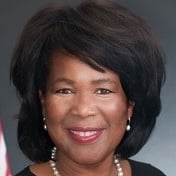 Peggy Carr is the former commissioner of the National Center for Educational Statistics. Prior to NCES, Dr. Carr served as the chief statistician for the Office for Civil Rights at the U.S. Department of Education. She received a bachelor’s degree in psychology from North Carolina Central University, with a concentration in statistics. Dr. Carr earned a master’s degree and a Ph.D. in developmental psychology from Howard University in Washington, D.C.
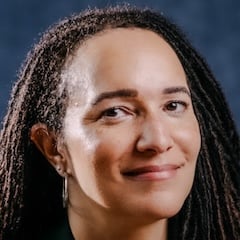 Tabbye M. Chavous is the executive director of the American Educational Research Association. She is a professor of education and psychology at the University of Michigan in Ann Arbor. An academic and administrative leader at the university for more than 25 years, she served as vice provost for equity and inclusion and chief diversity officer. Earlier in her tenure, she was co-director of the Center for the Study of Black Youth in Context at the university. Dr. Chavous holds a bachelor’s degree and a Ph.D. in community psychology from the University of Virginia.
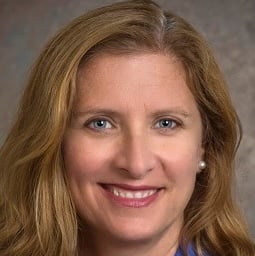
Laura Desimone is the L. Sandra and Bruce L. Hammonds Professor in Teacher Education at the University of Delaware. She holds a secondary appointment in the School of Public Policy and Administration. Before that, she was a professor at the Graduate School of Education at the University of Pennsylvania from 2007 until 2018. Dr. Desimone studies how state, district, and school-level policy can better promote changes in teaching that lead to improved student achievement and to closing the achievement gap between advantaged and disadvantaged students. Professor Desimone is a graduate of Wesleyan University in Middletown, Connecticut, where she majored in American studies. She holds a master of public admniistration degree from American University in Washington, D.C., and a Ph.D. in public policy analysis from the University of North Carolina at Chapel Hill.
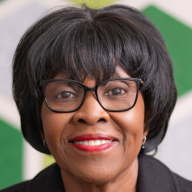 Patricia Edwards is a professor in the department of teacher education at Michigan State University. Dr. Edwards is nationally and internationally recognized for her groundbreaking work on parent involvement, family–school–community partnerships, multicultural literacy, early literacy, and family and intergenerational literacy — particularly among historically marginalized, low-income, and minoritized children and families. She is the author or editor of several books including
 Adrianna Kezar is the Dean’s Professor of Leadership and the Wilbur-Kieffer Professor of Higher Education at the University of Southern California. She also serves as director of the Pullias Center for Higher Education at the university. Professor Kezar is an expert on change leadership, diversity, equity and inclusion, faculty, STEM reform, collaboration, and governance in higher education. She joined the faculty at USC in 2003 after serving on the faculty at the University of Maryland and George Washington University. Dr. Kezar is a graduate of the University of California, Los Angeles, where she majored in art history. She holds a master’s degree and a Ph.D. in education from the University of Michigan.
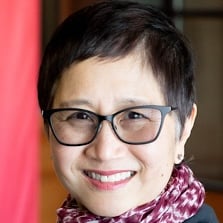 Stacey J. Lee is the Vilas Research Professor and Frederick Erickson WARF Professor in the School of Education at the University of Wisconsin-Madison. Her research focuses on the role of education in the incorporation of immigrants into the United States. She is the author of several books including
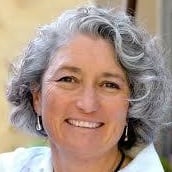 Judit Moschkovich is a Distinguished Professor of Mathematics Education at the University of California, Santa Cruz. Before coming to UCSC in 1999, Dr. Moschkovich was a lecturer at the University of California, Berkeley and a researcher at the Institute for Research on Learning in Palo Alto, California. She is the editor of the book Language and Mathematics Education: Multiple Perspectives and Directions for Research (Information Age Publishing, 2010). Professor Moschkovich is a graduate of the University of Minnesota, where she majored in physics. She holds a Ph.D. in mathematics education from the University of California, Berkeley.
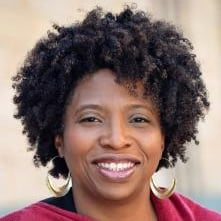 Carla O’Connor is the Arthur F. Thurnau Professor in the Marsal Family School of Education at the University of Michigan. She also serves as the director of University of Michigan Wolverine Pathways, a free year-round program that partners with the families, schools, and communities of Detroit, Ypsilanti, and Southfield to support academic success, college admission, and career exploration. Professor O’Connor is co-editor of the book Beyond Acting White: Reframing the Debate on Black Student Achievement (Roman & Littlefield Publishers, 2006). Dr. O’Connor is a graduate of Wesleyan University in Middletown, Connecticut, where she majored in English. She holds a master’s degree and a Ph.D. in education from the University of Chicago.
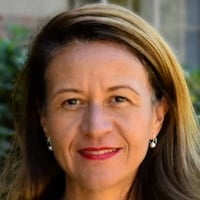 Cecilia Rios-Aguilar is a professor of education and department chair in the School of Education and Information Studies at the University of California, Los Angeles. She also serves as associate dean of equity, diversity, and inclusion. She is past director of the Higher Education Research Institute at UCLA. She is co-editor of Funds of Knowledge in Higher Education: Honoring Students’ Cultural Experiences and Resources as Strengths (Routledge, 2017). Professor Rios-Aguilar is a graduate of the Instituto Tecnológico Autónomo de México, where she majored in economics. She holds a master’s degree in educational administration and a Ph.D. in education theory and policy from the University of Rochester in New York.
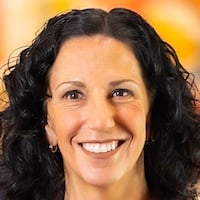 Katharine O. Strunk is the George and Diane Weiss Professor of Education and Dean of the Graduate School of Education at the University of Pennsylvania in Philadelphia. Prior to joining the faculty at Penn in 2023, Dr. Strunk was the Clifford E. Erickson Distinguished Chair in Education and a professor of education policy at Michigan State University. From 2009 to 2017 she served on the faculty of the University of Southern California. Dr. Strunk also served as president of the Association for Education Finance and Policy. A graduate of Princeton University, where she majored in public policy, Dr. Strunk holds a master’s degree in economics and a Ph.D. in education administration and policy analysis from Stanford University.
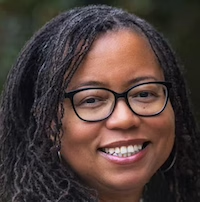 Nicole Patton Terry is the Olive & Manuel Bordas Professor in the School of Teacher Education and director of the Florida Center for Reading Research at Florida State University. Dr. Terry’s research, innovation, and engagement activities concern young learners who are vulnerable to experiencing difficulty with language and literacy achievement in school. She currently serves as president of the Society for the Scientific Study of Reading. Dr. Terry earned a bachelor’s degree, a master’s degree, and a Ph.D. from Northwestern University’s School of Communication Sciences and Disorders, with a specialization in learning disabilities.
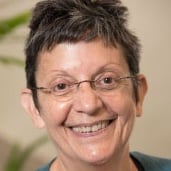 Beth Warren is the Sylvia Earl Professor and director of the Earl Center for Learning & Innovation at Boston University. She is also a professor in the department of language and literacy education. Dr. Warren and her colleagues investigate questions at the intersection of culture, language, race, learning and teaching across STEM, humanities, and arts disciplines. Professor Warren is a graduate of Wesleyan University in Middletown, Connecticut, where she majored in French language and literature. She holds a master’s degree and a doctorate in human development and reading from the Graduate School of Education at Harvard University.