
Exposure to Radiation Causes More Long-Term Health Complications for Women Than Men

Amanda Nichols

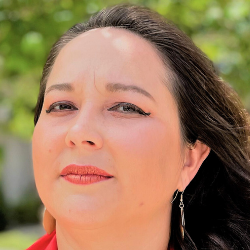
A new study from Amanda Nichols, postdoctoral researcher at the University of California, Santa Barbara, and Mary Olson, founder of the Gender and Radiation Impact Project based in Asheville, North Carolina, has uncovered a correlation between harm from exposure to ionizing radiation and biological sex, with women more likely than men to experience severe health complications.

The study builds on the findings of the “Biological Effects of Ionizing Radiation VII” study published by the National Academy of Sciences in 2006, which analyzed 60 years of data regarding atomic bomb survivors of Hiroshima and Nagasaki.

Mary Olson

Dr. Nichols and Olson’s post-2006 research revealed evidence that radiation exposure causes more cancer, heart disease, and stroke in women compared to men. The authors also found that age at time of exposure has a significant impact on radiation outcomes, with girls under the age of 5 having the highest risk of both cancer and non-cancer related health complications over the course of their lifetimes.

One theory as to why these disparities exist is because women have more radio-sensitive reproductive tissue than men. While this could be one contributing factor, the authors call out the hypothesis cannot be the only determining factor in women’s greater incidence of harm from radiation as the theory does not explain disparities in cardiovascular and other non-reproductive-related complications. Dr. Nichols and Olson stress that further investigation in this area is critical for the future of radiation research and radiological protection standards.

LEAVE A REPLY

Please enter your comment!
Please enter your name here

This site uses Akismet to reduce spam. Learn how your comment data is processed.

Related Articles

Latest News

Michelle R. Johnston Named the First Woman President of the University of Montevallo

Although it was initially founded as school for women, the University of Montevallo has never had a woman president. Now the university has reached a historic milestone and selected selected Michelle R. Johnston to serve as its next president.

Katy Ho to Lead Portland Community College in Oregon

Dr. Ho is the new acting president of Portland Community College. Prior to her new role, she was the college's executive vice president.

Five Women Scholars Selected to Lead Professional Organizations in Their Fields

The women who are taking on new leadership roles with professional academic organizations are Yasmeen Shorish of James Madison University in Virginia, Elena Carbone of the University of Massachusetts Amherst, Shelley Lusetti of New Mexico State University, Oona Hathaway of Yale Law School, and Keisha Blain of Brown University.

Katherine Yelick to Direct Lawrence Berkeley National Laboratory

Lawrence Berkeley National Laboratory is a national program run by the University of California for the U.S. Department of Energy's Office of Science. Dr. Yelick, a computer scientist and longtime UC Berkeley faculty member, will become the laboratory's next director on July 1.

Two Women Selected for Key Interim Leadership Roles with the Universities of Wisconsin

Renée Wachter, chancellor of the University of Wisconsin-Superior, has been selected to serve as interim president of the Universities of Wisconsin. Maria Cuzzo, provost of UW-Superior, will serve as the university's interim chancellor while Dr. Wachter assumes her new responsibilities.

President

The next president will lead one of the most successful and well-respected community colleges in the country.

Research Assistant Professor, Kenneth C. Griffin Department of Economics

The selected candidate should have expertise and experience in theoretical models in labor and public economics as well as in microeconometrics and programming.