


 The John D. and Catherine T. MacArthur Foundation recently announced the 20 latest recipients in its fellowship program, commonly referred to as “genius grants.” MacArthur fellows receive a grant of $800,000 over five years to spend however they want on their academic or creative endeavors. Winners have shown exceptional creativity in their work and the promise to do more.
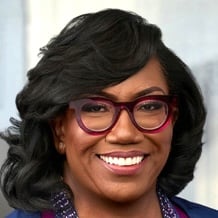 Kristen Mack, vice president at the MacArthur Foundation, stated that “for 45 years, MacArthur Fellows have defied boundaries, by questioning conventions, crossing disciplines, and driving collective progress. The 2026 Fellows continue that creative tradition — they explore the depths of our humanity; they reveal untold origins to modern challenges; they expand the edges of scientific inquiry and life-saving research. They show us new ways to understand the world.”
Of this year’s 20 winners, six are women with ties to the academic world in the United States.
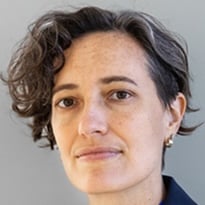 Holly Jean Buck is an associate professor in the department of environment and sustainability at the University at Buffalo of the State University of New York System. Her research examines the social, ethical, and political dimensions of emerging climate and energy policies. Dr. Buck is the author of After Geoengineering: Climate Tragedy, Repair, and Restoration (Verso, 2019). A graduate of the University of Maryland, Baltimore County, Dr. Buck holds a master’s degree in human ecology from Lund University in Sweden and a Ph.D. in development sociology from Cornell University.
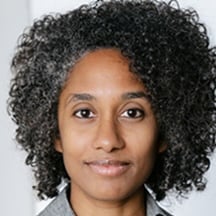 Ellora Derenoncourt is an associate professor in the department of economics at Princeton University, where she also serves as founder and faculty director of the Program for Research on Inequality. Previously, she was an assistant professor in the department of economics and the Goldman School of Public Policy at the University of California, Berkeley. Dr. Derenoncourt is a graduate of Harvard University. She holds a master’s degree from the London School of Economics and a Ph.D. from Harvard University.
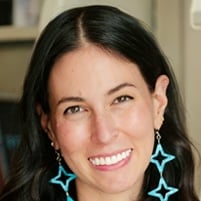 Elizabeth Ellis is an associate professor in the department of history at Princeton University. From 2017 to 2022, she was an assistant professor of history and co-director of the Native Studies Forum at New York University. Her research sheds light on the different strategies Native nations used to maintain their livelihoods and wield influence among European settlers. Dr. Ellis is the author of The Great Power of Small Nations: Indigenous Diplomacy in the Gulf South (University of Pennsylvania Press, 2022). Dr. Ellis is a graduate of Tulane University in New Orleans and earned a Ph.D. from the University of North Carolina at Chapel Hill. From 2015 to 2017, she was a postdoctoral fellow at the McNeil Center for Early American Studies at the University of Pennsylvania.
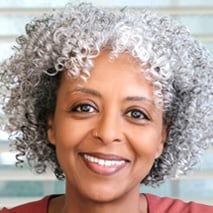 Maaza Mengiste is a professor of English at Wesleyan University in Middletown, Connecticut. She previously taught at Princeton University and Queens College in New York City. Profesor Mengiste’s first novel, Beneath the Lion’s Gaze (W.W. Norton, 2010), follows a physician and his two sons during the fall of Ethiopian Emperor Haile Selassie and the rise of an oppressive military junta. In The Shadow King (W.W. Norton, 2019), Mengiste brings to life the little-known history of women resistance fighters during the Italian occupation of Ethiopia. Professor Mengiste is a graduate of the University of Michigan and holds a master of fine arts degree from New York University.
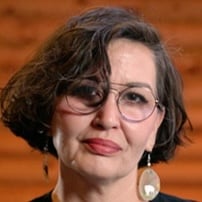 Layli Long Soldier has taught at Diné College, the Iowa Writer’s Workshop, Randolph College, and the Institute of American Indian Arts, and she was the endowed chair of creative writing at Texas State University from 2024 to 2025. In her poetry, Long Soldier interrogates the colonial violence inflicted on Native Americans. At the same time, she celebrates the beauty, love, and resilience passed down through generations and communities by way of care and tradition. Her poetry collection Whereas was published by Graywolf Press in 2017. Long Soldier holds a bachelor of fine arts degree from the Institute of American Indian Arts and a master of fine arts degree from Bard College in New York.
 Kate Spradley is a professor in the department of anthropology at Texas State University, San Marcos. She is a forensic anthropologist enabling identification and repatriation of the remains of migrants who have perished along the Texas-Mexico border. As co-founder and member of the Forensic Border Coalition, Dr. Spradley has influenced policy changes at both the local and national levels to facilitate identification and connections with family members. Dr. Spradley received bachelor’s and master’s degrees from the University of Arkansas and a Ph.D. from the University of Tennessee.