


 Londa Schiebinger, the John L. Hinds Professor of History of Science and professor in the department of history at Stanford University in California, has received the 2026 Centennial Medal from Harvard’s Kenneth C. Griffin Graduate School of Arts and Sciences. Considered the school’s highest honor, the medal acknowledges alumni who have made significant contributions to society through a framework based in their graduate education.
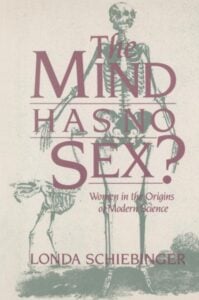 Dr. Schiebinger is a leading authority on sex and gender in the history of science and the study of women scientists in the eighteenth century. After receiving her bachelor’s degree in English from the University of Nebraska, she earned her Ph.D. in history from Harvard in 1984. Her doctoral dissertation ultimately led to two field-defining books, The Mind Has No Sex? Women in the Origins of Modern Science (Harvard University Press, 1989) and Nature’s Body: Gender in the Making of Modern Science (Beacon Press, 1993). Later in her career, Dr. Schiebinger examined the circulation and suppression of knowledge through her books Plants and Empire: Colonial Bioprospecting in the Atlantic World (Harvard University Press, 2004) and Secret Cures of Slaves: People, Plants, and Medicine in the Eighteenth-Century Atlantic World (Stanford University Press, 2017).
A Stanford faculty member for more than two decades, Dr. Schiebinger directs the university’s Gendered Innovations in Science, Health & Medicine, Engineering and Environment. The project brings humanities analysis into the sciences, ensuring that scientific work is more rigorous, relevant, and beneficial for everyone. Dr. Schiebinger has frequently consulted with the United Nations, the European Commission, and National Science Foundation, helping to shape science policy and integrate gender analysis into scientific research.