


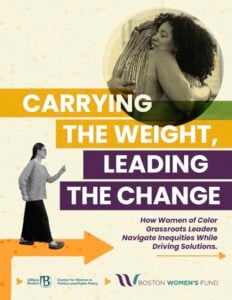
 Less than 0.5 percent of Greater Boston’s nonprofits explicitly serve women and girls of color, and only 0.02 percent of the area’s nonprofit revenue flows to those organizations, according to a new report led by Boston Women’s Fund and the Center for Women in Politics and Public Policy at the University of Massachusetts Boston.
Between 2018 and 2023, there were significant changes in the demographics of Greater Boston’s female population. During this time period, the share of women under the age of 35 declined, while the share of women over age 65 increased by more than 10 percent. By race, there was significant population growth among women from multiracial, Alaska Native, and Native Hawaiian/Pacific Islander women, and smaller increases among White and Asian women. In contrast, Greater Boston’s share of Black and Latina women declined by 7 percent and 5 percent, respectively.
Grassroots organizations that serve women of color are often focused on addressing the systemic inequities facing this population, who are disproportionately impacted by rising costs of childcare, housing, and other living expenses. There are also significant gaps in education and income, as well as major disparities in healthcare between White women and women of color.
However, there are severe funding inequities for nonprofits serving women of color, and the community’s needs are outpacing the flow of money to organizations that support them. Of Greater Boston’s $112 billion in total nonprofit revenue in 2023, only $1 billion went to women- and girls-serving organizations. Just $25 million went to groups specifically focused on women and girls of color.
Furthermore, more than 60 percent of revenue to organizations supporting women flows to five organizations (Wellesley College, Upstream USA, Dana Hall School, Winsor School, and Planned Parenthood) — none of which are solely dedicated to women of color. Organizations serving women of color have annual revenues of less than $1 million, compared to $2.7 million for other women’s and girls’ groups and $11 million for all other organizations.
According to the report, the funding areas that receive support are mismatched with the specific needs facing women and girls of color. Compared nationally, more of Greater Boston’s women’s- and girls-serving nonprofits focus on same-sex education and sports rather than issues relating to healthcare, affordable housing, employment, or gender-based violence.
There are also significant disparities in the staffing levels and compensation at grassroots organizations led by women of color. Organizations that are led by a BIPOC woman operate with an average staff of 20 volunteers and six employees. White woman-led organizations average 89 volunteers and seven employees, and male-led organizations average 29 volunteers and seven employees. Women of color who lead Greater Boston’s nonprofits also have the lowest median compensation compared to White women, BIPOC men, and White men. These compounding challenges have caused significant burnout among the area’s nonprofit-leading women of color.
The report authors offer several recommendations on how the Greater Boston area can better support nonprofits dedicated to women and girls of color, such as reducing barriers to funding, expanding multi-year funding opportunities, and investing in support systems for organization leaders.
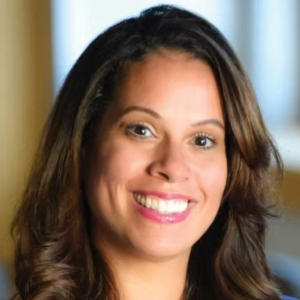 “We are living in extraordinary times. It’s clear that carrying on with business-as-usual practices will continue to fail women and gender-expansive grassroots leaders of color. But thankfully, this flawed system can be redesigned,” said Natanja Craig Oquendo, CEO of Boston Women’s Fund. “We’re thinking differently about philanthropy, about how to be stronger partners to nonprofit leaders, and we’re asking others in the sector to join us.”