
Study Finds Significant Lack of Research on Effective Weight Loss Plans for Black Women

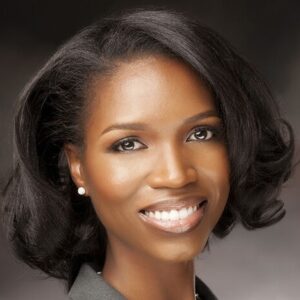
Dr. Loneke Blackman Carr

A study led by Loneke Blackman Carr, assistant professor of nutritional science at the University of Connecticut, has uncovered that many traditional weight loss plans are ineffective for Black women due to a significant lack of research on their unique needs for lifestyle changes.

For the study, Dr. Carr and her co-author, Jameta N. Barlow, assistant professor in George Washington University’s department of women’s gender, and sexuality studies, reviewed 10 years of research from 2012 to 2022 regarding behavioral weight loss treatments. Of the 138 studies they reviewed, just eight projects included a sample where Black women made up at least half of all participants.

The studies analyzed by Dr. Carr and Dr. Barlow featured lifestyle interventions focused on health diet and physical activity, and included a clinical target of 5 to 10 percent weight loss for each participant. However, they found these interventions often resulted in only a 2 to 3 percent weight loss in Black women participants.

Dr. Jameta N. Barlow

Additionally, there was little consistency among the studies’ interventions as they varied widely in design, selection, and approach. Some weight loss treatments focused on the centrality of faith and religion in Black life, while others focused on economic contexts, social norms, or structural barriers to food and physical activity.

Dr. Carr and Dr. Barlow argue that weight loss interventions for Black women must take a more holistic approach grounded in Black feminism and womanism. They suggest future research investigators utilize a participant-guided process, where individuals are empowered to create change in their own lives.

“This approach aligns with modern discourse on the value of cocreating public health interventions with participants, moving toward more participatory, community-engaged research,” the authors write. “Interventions designed with Black women for Black women will be important to generate holistic solutions for weight loss.”

LEAVE A REPLY

Please enter your comment!
Please enter your name here

This site uses Akismet to reduce spam. Learn how your comment data is processed.

Related Articles

Latest News

Michelle R. Johnston Named the First Woman President of the University of Montevallo

Although it was initially founded as school for women, the University of Montevallo has never had a woman president. Now the university has reached a historic milestone and selected selected Michelle R. Johnston to serve as its next president.

Katy Ho to Lead Portland Community College in Oregon

Dr. Ho is the new acting president of Portland Community College. Prior to her new role, she was the college's executive vice president.

Five Women Scholars Selected to Lead Professional Organizations in Their Fields

The women who are taking on new leadership roles with professional academic organizations are Yasmeen Shorish of James Madison University in Virginia, Elena Carbone of the University of Massachusetts Amherst, Shelley Lusetti of New Mexico State University, Oona Hathaway of Yale Law School, and Keisha Blain of Brown University.

Katherine Yelick to Direct Lawrence Berkeley National Laboratory

Lawrence Berkeley National Laboratory is a national program run by the University of California for the U.S. Department of Energy's Office of Science. Dr. Yelick, a computer scientist and longtime UC Berkeley faculty member, will become the laboratory's next director on July 1.

Two Women Selected for Key Interim Leadership Roles with the Universities of Wisconsin

Renée Wachter, chancellor of the University of Wisconsin-Superior, has been selected to serve as interim president of the Universities of Wisconsin. Maria Cuzzo, provost of UW-Superior, will serve as the university's interim chancellor while Dr. Wachter assumes her new responsibilities.

President

The next president will lead one of the most successful and well-respected community colleges in the country.

Research Assistant Professor, Kenneth C. Griffin Department of Economics

The selected candidate should have expertise and experience in theoretical models in labor and public economics as well as in microeconometrics and programming.