


In the workplace, sponsorship is when a senior colleague uses their personal resources in their social network to advocate for a junior colleague. These relationships are often beneficial for protégés’ career advancement, but can also help sponsors expand their own networks.
A new study from Elizabeth Campbell of the University of California, San Diego and Catherine Shea of Carnegie Mellon University in Pittsburgh has found that male sponsors are more likely to use sponsorship for their own benefit, while women are more likely to focus their efforts on ensuring their protégé’s success.

In a series of four experiments regarding over 1,700 professionals working in a wide range of industries, Dr. Campbell and Dr. Shea found that men approach sponsorship with less complexity, often setting fewer goals that center on their own success, whereas women often set multiple, conflicting goals directed at their protégé’s development. This gender difference widens as sponsors attain more senior roles. As men progress in their careers, they are even more likely to use sponsorship for their own benefit, while women’s sponsorship patterns remain unchanged as they advance in their careers.
Furthermore, when engaging in sponsorship, male sponsors are more likely to leverage the opportunity to reach out to new connections, thus diversifying and expanding their personal network in the process. In contrast, women sponsors are more likely to utilize their own existing networks. These already established relationships can provide a reliable source for their protégés’ development, but may lead to fewer opportunities for both protégés and the sponsors.
Going forward, the authors suggest both leaders and firms should focus on encouraging the “win-win” opportunities that sponsorship presents for both junior and senior colleagues. By making the benefits – and potential drawbacks – of sponsorship more transparent, both men and women can become more effective sponsors.
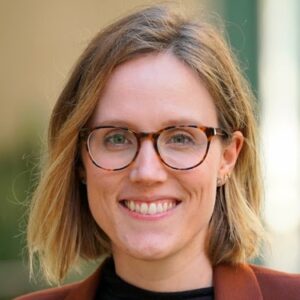
Dr. Campbell is an assistant professor of management at the Rady School of Management at the University of California, San Diego. She focuses her research on gender differences in career advancement. Dr. Campbell is a graduate of Wellesley College in Massachusetts. She holds a Ph.D. in organizational behavior and theory from Carnegie Mellon University.
Dr. Shea, assistant professor of organizational behavior and theory at the Tepper School of Business at Carnegie Mellon University, conducts research spanning the fields of psychology, sociology, and management. She holds a bachelor’s degree in commerce and a master’s degree in organizational behavior from Queens University in Kingston, Ontario. Dr. Shea earned her Ph.D. in management from Duke University in Durham, North Carolina.