


 The Franklin Institute in Philadelphia recently announced the recipients of the 2026 Benjamin Franklin Medals. Founded in 1824, the prestigious honor is presented annually to recognize “the greatest minds in science, engineering, and technology.”
This year, three of the eight 2026 laureates are women professors. All laureates will receive their medals at The Franklin Institute Awards Ceremony and Dinner on April 30, 2026.
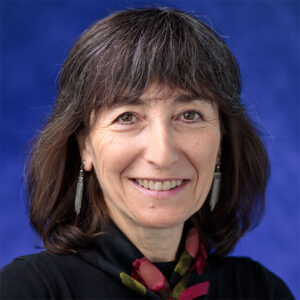 Wendy Laurel Freedman, the John and Marion Sullivan University Professor of Astronomy and Astrophysics at the University of Chicago, received the Benjamin Franklin Medical in Physics “for scientific investigations that established precision measurements of the expansion rate of the universe, and for leading efforts to make the next generation of these measurements even more precise.”
A leading scholar in observational cosmology, Dr. Freedman is currently conducting research involving the measurements of the Hubble constant, including the current expansion rate, as well as the past expansion rate, providing constraints on the acceleration of the universe and dark energy. Her other research interests include the stellar populations of galaxies, the evolution of galaxies, and the initial mass function. Dr. Freedman earned a bachelor’s degree in astronomy and a Ph.D. in astronomy and astrophysics from the University of Toronto.
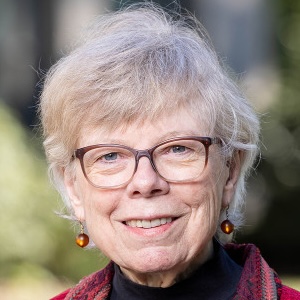 Dedre Gentner, the Alice Gabrielle Twilight Professor of Psychology at Northwestern University, received the Benjamin Franklin Medical in Computer and Cognitive Science “for elucidating the unique power of human thought, including its roots in the acquisition and use of language, metaphors, maps, and analogies, and for charting new ways to support and enhance these skills.”
At Northwestern, Dr. Gentner is the founder and former director of the cognitive science program and co-principal investigator of the Spatial Intelligence and Learning Center. As a scholar, she has made groundbreaking contributions to the study of analogical processing and the development of cognition and language. Her structure-mapping theory has led to insights into the role of relations in conceptual processing and to a computational model of analogy and similarity. Dr. Gentner received a bachelor’s degree in physics from the University of California, Berkeley, and a Ph.D. in psychology from the University of California, San Diego.
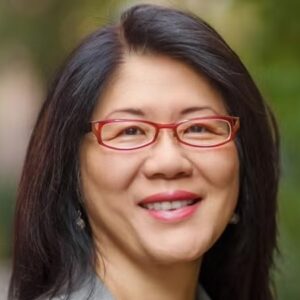 Karen C. Seto, the Frederick C. Hixon Professor of Geography and Urbanization Science at the Yale School of the Environment, received the Benjamin Franklin Medical in Earth and Environmental Science “for pioneering work integrating satellite imagery, modeling methods, and social sciences to analyze the consequences of urbanization, land use, and global environmental change.”
Dr. Seto is one of the world’s leading experts on urbanization and its effects on the planet, including climate change, biodiversity, and food systems. A geographer and urbanization scientist, she has extensive fieldwork experience in Asia, especially China and India, where she has conducted research for over 20 years and 10 years, respectively. In addition to her endowed appointment at Yale, Dr. Seto directs the university’s Hixon Center for Urban Sustainability and co-directs the Yale Center for Geospatial Solutions. Dr. Seto is a graduate of the University of California, Santa Barbara, where she majored in political science. She earned a master’s degree in international relations and a Ph.D. in geography from Boston University.