


 The L’Oréal Groupe, the world’s leading beauty company, produces over 35 beauty brands. L’Oréal USA, the company’s largest division, generates more than $11 billion in sales annually.
L’Oréal USA has revealed the 2025 For Women in Science (FWIS) awardees, providing five women postdoctoral scientists with grants in order to advance their research. The candidates for the L’Oréal USA FWIS program were evaluated based on several factors, including their research potential, scientific excellence, and their commitment to supporting future generations of women and girls in science.
The program, a cornerstone of L’Oréal USA’s efforts over 21 years, reflects the unwavering commitment to supporting women in shaping their future and making a difference in society through scientific research. This year, L’Oréal USA has increased its investment to $75,000 per awardee, providing meaningful support for the cohort of women scientists.
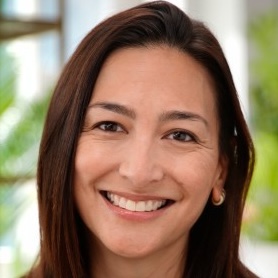
“For more than two decades, L’Oréal USA’s For Women in Science program has invested in exceptional researchers whose work advances scientific knowledge and creates meaningful solutions for our world,” said Marissa McGowan, chief sustainability officer for L’Oréal North America, who holds a bachelor’s degree and a juris doctorate from Georgetown University. “Our commitment goes beyond funding research — we’re investing in career development, mentorship, and community that unlock the full potential of women in science. This year’s awardees aren’t just advancing their fields — they’re opening doors for the next generation and redefining leadership. That’s value that compounds over time, creating opportunity that extends far beyond any single grant or award.”
The five women in this year’s cohort are:
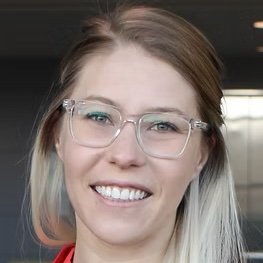 Rebecka J. Sepela is a postdoctoral research fellow at Harvard University. She specializes in collaborative, curiosity-guided research into the intricate ways molecules from the natural world interact with animal chemical receptors. Her work aims to illuminate how these interactions influence animal physiology and behavior. Currently, she is studying the octopus as a unique research model to understand how molecules from our invisible microbial world shape the everyday experiences of animals. Dr. Sepela is a graduate of Miami University in Ohio, where she majored in biochemistry. She earned a Ph.D. in biochemistry from the University of California, Davis.
 Kaitlyn A. Webster is a postdoctoral research fellow at Harvard Medical School. She studies the rapidly evolving Mexican tetra fish to research fundamental topics in reproductive biology: male and female development from the same biological starting point, the impact of extreme environmental changes on fertility, and species-specific attraction of sperm and eggs. Dr. Webster is a graduate of Smith College in Northampton, Massachusetts, where she majored in biology. She earned a Ph.D. in molecular biology from the University of Massachusetts Boston.
 Georgia Squyres is the Damon Runyon postdoctoral fellow in the Biology and Biological Engineering Division at the California Institute of Technology. She investigates the complex world of bacterial communities, specifically biofilms. Dr. Squyres employs advanced microscopy to observe these biofilms in real-time, meticulously documenting where, when, how, and why they perform their designated functions. Dr. Squyres has a bachelor’s degree in biophysics from Columbia University and a Ph.D. in biochemistry from Harvard University.
 Kaveeta Kaw is a postdoctoral researcher at Emory University School of Medicine in Atlanta. She utilizes 3D bioprinting technology to model and gain a deeper understanding of pulmonary arterial hypertension, a severe lung disease. She aims to significantly accelerate the discovery of new treatments and improve patient outcomes by tailoring therapies precisely to the unique biology of each individual. Dr. Kaw is a graduate of the University of Texas at Austin, where she majored in neurobiology. She holds a medical doctorate and a Ph.D. from the University of Texas Health in Houston.
 Sydney Aten is a research fellow in neurology at the Beth Israel Deaconess Medical Center and Harvard Medical School. She focuses on understanding the body’s internal clock, or circadian rhythms. Her research specifically targets female core body temperature and its relation to fertility, including challenges posed by night-shift work. Her research seeks to lay a robust foundation for utilizing body temperature as an insightful tool to better comprehend, monitor, and understand female fertility across diverse populations. Dr. Aten holds a bachelor’s degree in molecular and cellular neuroscience, a master’s degree, and a Ph.D. in neuroscience, all from Ohio State University.