

 The John D. and Catherine T. MacArthur Foundation recently announced the 22 latest recipients in its fellowship program, commonly referred to as “genius grants.” MacArthur fellows receive a grant of $800,000 over five years to spend however they want on their academic or creative endeavors. Winners have shown exceptional creativity in their work and the promise to do more.
Of this year’s 22 winners, six are women scholars with current ties to the academic world in the United States.
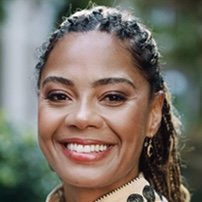 Kristina Douglass is an associate professor in the Climate School at Columbia University in New York City. From 2017 to 2022, she was an assistant professor of anthropology and African studies at Pennsylvania State University. Dr. Douglass is an archaeologist investigating how human societies and environments co-evolved and adapted to climate variability. Dr. Douglass’ research focuses on coastal communities in southwest Madagascar. Dr Douglass is a graduate of Dartmouth College in Hanover, New Hampshire, where she majored in classics. She holds a master’s degree and a Ph.D. in anthropology from Yale University.
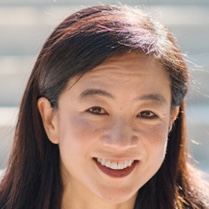 Hahrie Han is the Stavros Niarchos Foundation Professor in the Department of Political Science at Johns Hopkins University in Baltimore, where she also serves as the inaugural director of the SNF Agora Institute and as the faculty director of the P3 Lab. She was a member of the political science faculty at Wellesley College in Massachusetts from 2005 to 2015. Dr. Han’s most recent book is Undivided: The Quest for Racial Solidarity in an American Church (Alfred A. Knopf, 2024). Dr. Han is a graduate of Harvard University, where she majored in American history and literature. She holds a Ph.D. in American politics from Stanford University.
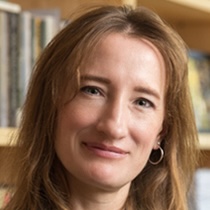 Ieva Jusionyte is the Watson Family University Professor of International Security and Anthropology in the Watson School of International and Public Affairs at Brown University, where she also serves as director of the Center for Human Rights and Humanitarian Studies. She was previously a member of the anthropology faculty at Harvard University (2016–2020) and an assistant professor of anthropology at the University of Florida (2012–2016), Dr. Jusionyte is a cultural anthropologist exploring the political and moral ambiguities of border regions, where state policies regulate historically shifting distinctions between legal and illegal practices. Her most recent book, Exit Wounds: How America’s Guns Fuel Violence Across the Border (University of California Press, 2024), traces the staggering volume of firearms that flow southward from the United States to Mexico. Dr. Jusionyte is a graduate of Vilnius University in Lithuania. She holds a Ph.D. from Brandeis University in Waltham, Massachusetts.
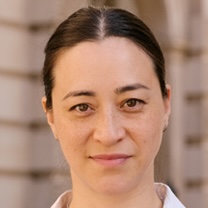 Gala Porras-Kim is currently a visiting critic in sculpture at the Yale School of Art. She is an interdisciplinary artist proposing new ways to make visible the layered meanings and functions of cultural artifacts held in museums and institutional collections. Her work has been exhibited at such venues as the Carnegie Museum of Art in Pittsburgh, the Storefront for Art and Architecture in New York City, and the Museum of Contemporary Art in Denver. Porras-Kim received bachelor’s and master’s degrees from the University of California, Los Angeles. She earned an MFA from the California Institute of the Arts.
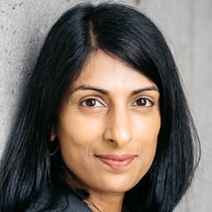 Teresa Puthussery is an associate professor in the Herbert Wertheim School of Optometry and Vision Science at the University of California, Berkeley. Earlier, she served on the faculty of Oregon Health and Science University. A neurobiologist and optometrist, Dr. Puthussery explores how neural circuits of the retina encode visual information for the primate brain. Professor Puthussery received a bachelor’s degree and a Ph.D. from the University of Melbourne in Australia.
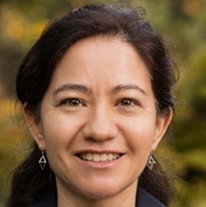 Lauren K. Williams is the Dwight Parker Robinson Professor of Mathematics at Harvard University. She was a faculty member at the University of California, Berkeley, from 2009 to 2018. Professor Williams has made significant contributions to numerous mathematical fields, including cluster algebras, representation theory, and algebraic geometry. Dr. Williams received a bachelor’s degree in mathematics from Harvard University. She earned a Ph.D. in mathematics from the Massachusetts Institute of Technology.