


 The American Academy of Nursing recently named six nurse leaders and educators as 2025 Living Legends – the academy’s highest honor. The prestigious designation is granted to individuals who exemplify the resolve and ingenuity of the nursing profession and have made significant impacts on health systems and health policy. Five of this year’s six Living Legends are women professors.
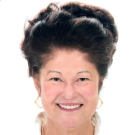 Dyanne D. Affonso is a professor emerita and former dean of the faculty of nursing at the University of Toronto. She is also the honorary president of the OPI Centre of Excellence in Rome. Her nursing expertise centers on maternal health, mental health, and health equity. Her many accomplishments include her work on addressing health disparities among Native Hawaiians and other diverse populations, as well as her research on postpartum depression, which led to the condition’s inclusion as a women’s health priority at the National Institutes of Health. Dr. Affonso earned her bachelor’s degree in nursing from the University of Hawaii, a master’s degree in nursing from the University of Washington, and a Ph.D. in clinical psychology from the University of Arizona.
 Connie W. Delaney is a professor and dean of the School of Nursing at the University of Minnesota. Over the past five decades, she has shaped the integration of informatics into nursing education, research, and practice. She was among the first scholars to extract code and nursing data from electronic health records, leading to the development of the Nursing Minimum Data Set and the Nursing Management Minimum Data Set, which are both used by researchers around the world. At the University of Minnesota, she founded the country’s first informatics-focused doctor of nursing practice programs. She is also the co-founder of the Alliance for Nursing Informatics. Dr. Delaney is a graduate of Viterbo University in Wisconsin, where she double-majored in nursing and mathematics. She holds a master’s degree in nursing and a Ph.D. in education administration and computer applications from the University of Iowa.
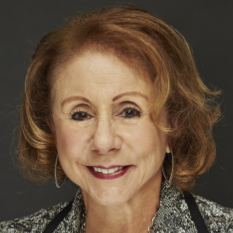 Judith E. Haber is a professor emerita and executive director of the Oral Health Nursing Education and Practice program at New York University’s Rory Meyers College of Nursing. Throughout her career, she has worked to advance psychiatric-mental health nursing policy and standards, as well as evidence-based nursing practice. More recently, she has focused on integrating oral health into nursing and interprofessional education. She is the co-author of the widely used textbook, Nursing Research: Methods and Critical Appraisal for Evidence-Based Practice (Elsevier, 2025), which is now in its 11th edition and has been translated into six languages. A graduate of Adelphi University, Dr. Haber holds a master’s degree and a Ph.D. from New York University.
 Christine A. Miaskowski is a professor emeritus of physiological nursing at the University of California, San Francisco School of Nursing. Her extensive research on pain management and symptom science has significantly influenced the field of oncology nursing and advanced the scientific understanding of patient experiences in chronic illness. Through her work in opioid pharmacology, she established foundational evidence for the field of sex-based differences in pain research. Additionally, she was among the first scientists to explore symptom clusters in oncology, highlighting how multiple symptoms co-occur and affect patients’ quality of life. Dr. Miaskowski received a bachelor’s degree in nursing from Molloy College in New York and a master’s degree in nursing from Adelphi University in Garden City, New York. She holds a second master’s degree in biology and a Ph.D. in physiology from St. John’s University in Queens, New York.
 Phyllis Sharps is a professor emerita at the Johns Hopkins School of Nursing in Baltimore. With a career spanning more than 40 years, Dr. Sharps has centered her work on supporting the health of women of color impacted by intimate partner violence (IPV). She is known for the development of DOVE (Domestic Violence Enhanced Home Visitation), a National Institutes of Health-funded program that addresses IPV during pregnancy through home visits and empowers women to make informed decisions in collaboration with prenatal providers and domestic violence advocates. In addition to her IPV research and interventions, she has mentored hundreds of students and faculty from underrepresented backgrounds. Dr. Sharp received her bachelor’s degree from the University of Maryland and her master’s degree from the University of Delaware. She later returned to the University of Maryland to complete her doctorate.